
Indoor plants thrive in environments that mimic their natural habitats, and humidity plays a crucial role in their health. Many plant enthusiasts often overlook this essential factor, leading to drooping leaves and stunted growth. Understanding how to effectively humidify indoor spaces can transform a lackluster plant collection into a vibrant jungle.
With the right humidity levels, plants can absorb moisture more efficiently, enhancing their overall vitality. This article explores various methods of indoor plant humidification, from simple DIY solutions to advanced systems. Whether you’re a seasoned gardener or just starting, discovering the best ways to maintain humidity can elevate your indoor gardening experience and ensure your leafy companions flourish.
Understanding Indoor Plant Humidification
Humidity plays a vital role in the health and growth of indoor plants. Many plant enthusiasts overlook this factor, which can lead to issues such as drooping leaves and stunted growth.
Importance of Humidity for Indoor Plants
Humidity affects the transpiration process in plants. Transpiration allows plants to absorb moisture from the air, impacting their nutrient uptake. Low humidity levels can cause leaves to dry out, leading to brown tips and edges. Insufficient moisture in the air also stresses plants, making them more susceptible to pests and diseases. Maintaining adequate humidity fosters healthier plants, improves leaf quality, and encourages robust growth.
Ideal Humidity Levels for Various Plant Types
Different plant types thrive at varying humidity levels. The following table outlines specific humidity requirements:
| Plant Type | Ideal Humidity Level (%) |
|---|---|
| Tropical Plants | 60-80 |
| Succulents and Cacti | 30-50 |
| Ferns | 50-70 |
| Orchids | 50-70 |
| Snake Plants | 30-50 |
Understanding the needs of individual plants helps in creating a harmonious indoor environment. By implementing appropriate humidification techniques, plant owners can effectively support their plants’ growth and vitality.
Methods of Humidifying Indoor Plants
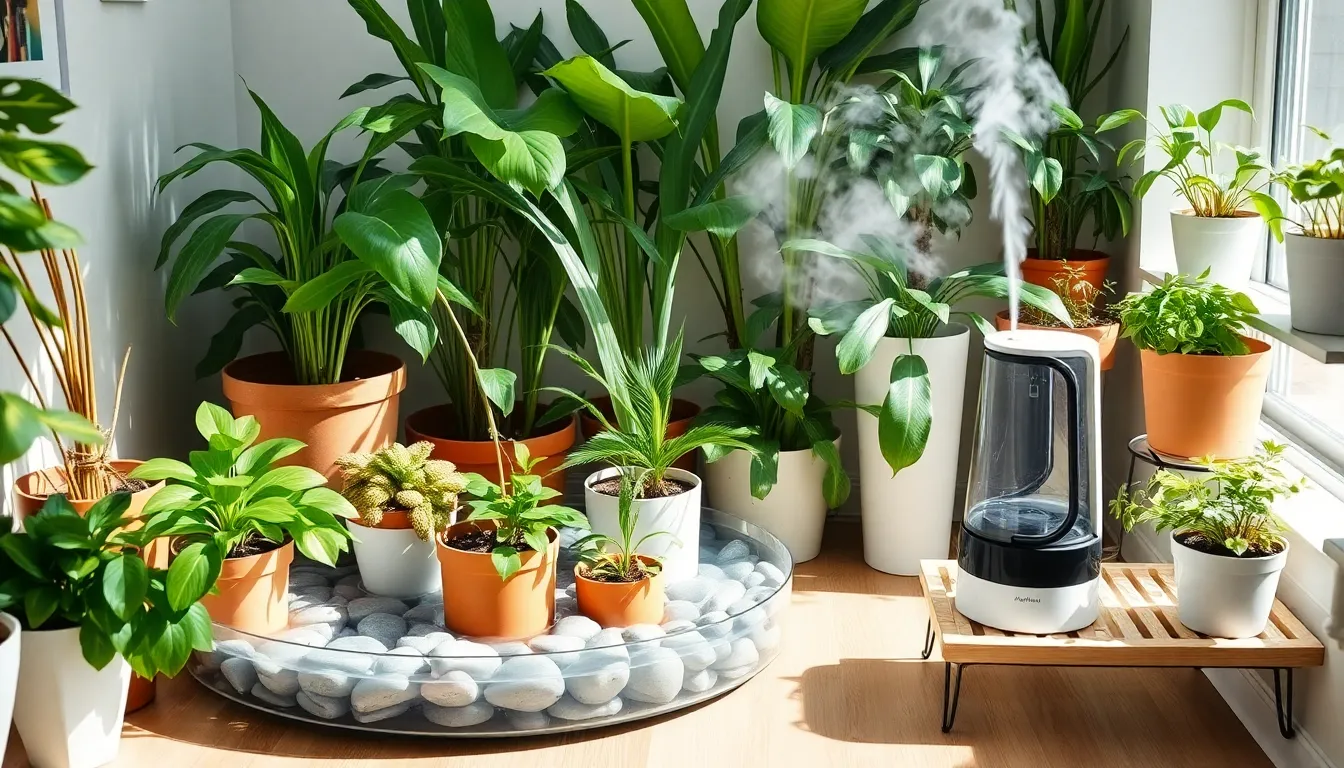
Various methods exist for humidifying indoor plants, each offering distinct advantages. Utilizing natural techniques, mechanical devices, or DIY solutions can enhance humidity levels effectively, supporting healthy plant growth.
Natural Humidification Techniques
Natural methods harness the environment to boost humidity. Placing plants together creates a microclimate, as they release moisture through transpiration. Grouping multiple plants increases humidity significantly. Meanwhile, positioning plants near water sources like fish tanks or fountains allows evaporation to raise local humidity levels. Bowls of water can also serve as natural humidifiers; simply set them around plants to enhance moisture in the air.
Mechanical Humidifiers
Mechanical humidifiers provide controlled humidity levels in indoor spaces. Ultrasonic humidifiers generate cool mist by vibrating water, making them ideal for maintaining humidity. Warm mist humidifiers heat water before releasing it, increasing warmth alongside moisture. Stand-alone units come in various sizes, accommodating small or large rooms. For optimal performance, select a humidifier equipped with a hygrometer to monitor humidity levels and adjust accordingly.
DIY Humidification Solutions
DIY solutions offer cost-effective ways to increase humidity for indoor plants. Pebble trays involve filling a shallow tray with pebbles and water, placing plant pots on top. As water evaporates, humidity increases around the plants. Misting plants with water regularly can also provide temporary humidity boosts; however, avoid over-wetting leaves, as this may promote fungal diseases. Lastly, utilizing a humid room, such as a bathroom, can create a more humid environment for moisture-loving plants.
Benefits of Proper Humidification
Proper humidification provides numerous advantages for indoor plants. It directly supports their growth and helps mitigate pest issues.
Enhancing Plant Growth
Enhancing plant growth relies on optimal humidity levels. Plants absorb moisture and nutrients more efficiently in humid environments. Adequate humidity encourages robust foliage, vibrant blooms, and improved overall health. For example, tropical plants thrive with 60-80% humidity, while cacti prefer drier conditions. A well-maintained humidity level fosters vigorous growth and lush greenery, promoting a vibrant indoor landscape.
Reducing Pest Infestations
Reducing pest infestations becomes easier with proper humidification. Low humidity stresses plants, leading to weakened defenses against pests. Common pests such as spider mites and aphids thrive in dry conditions. Maintaining higher humidity levels creates an unfavorable environment for these pests, decreasing their chances of infestation. Additionally, well-hydrated plants exhibit stronger resistance to diseases, enhancing their overall resilience.
Common Mistakes in Indoor Plant Humidification
Indoor plant humidification requires attention to detail, as several common mistakes can hinder plant health.
Over-Humidification Risks
Over-humidification poses significant risks to indoor plants. Excess moisture encourages fungal diseases like root rot and powdery mildew. It can also lead to insect infestations, specifically fungus gnats, that thrive in damp conditions. Maintaining humidity levels above 80% can stress many plants, causing leaf drop or decay. Therefore, careful monitoring of moisture levels is essential to prevent damp-related issues.
Neglecting Humidity Needs of Different Plants
Neglecting the individual humidity needs of different plants often leads to poor growth. Tropical plants generally thrive in humidity levels of 60-80%, while succulents and cacti prefer drier air, around 30-50%. Misjudging these requirements can result in severe stress, such as wilting or stunted growth. Understanding the specific needs of each plant type ensures optimal conditions for thriving indoor gardens.
Achieving the right humidity levels is essential for nurturing indoor plants. By understanding each plant’s unique needs and implementing effective humidification techniques, plant owners can create a thriving environment. Whether using simple DIY methods or investing in mechanical humidifiers, the benefits of proper humidity are clear. Healthier plants not only exhibit vibrant growth but also show increased resilience against pests and diseases. With a little attention to humidity, anyone can enhance their indoor gardening experience and enjoy a lush, green sanctuary at home.