
Imagine transforming your living room into a lush oasis without ever stepping outside. Indoor gardening is the perfect solution for anyone looking to bring a bit of nature indoors, even if the only thing they’ve successfully grown is a collection of dust bunnies. With the right plants, anyone can become a green-thumbed guru, turning their home into a vibrant sanctuary that’s both beautiful and beneficial.
Not only does indoor gardening brighten up any space, but it also purifies the air and boosts mood. Plus, who wouldn’t want to impress friends with their impressive collection of exotic plants? From low-maintenance succulents to fragrant herbs that can spice up dinner, the world of indoor gardening is full of possibilities. So grab those gardening gloves and let’s dig into the delightful world of cultivating greenery right at home.
Benefits Of Indoor Gardening
Indoor gardening provides various advantages that enhance living spaces and well-being. Engaging in this practice yields both health improvements and positive environmental effects.
Health Benefits
Indoor gardening contributes to better air quality by filtering pollutants and increasing oxygen levels. Studies show that houseplants reduce stress and promote relaxation, leading to improved mental health. Engaging with plants positively affects mood by releasing serotonin and dopamine. Gardening activities also offer physical exercise, which benefits overall fitness. Studies suggest spending time with plants can enhance focus and creativity, making indoor gardening a perfect activity for work-from-home setups.
Environmental Impact
Indoor gardens play a vital role in improving indoor air quality. Plants absorb carbon dioxide and release oxygen, enhancing the air people breathe. Studies demonstrate plants can remove toxins, such as formaldehyde and benzene, from the environment. Additionally, indoor gardening promotes biodiversity by providing habitats for beneficial insects. Growing plants indoors can also lead to reduced energy consumption by providing natural insulation. By actively participating in indoor gardening, individuals contribute to a sustainable environment while reaping personal benefits.
Essential Tools For Indoor Gardening
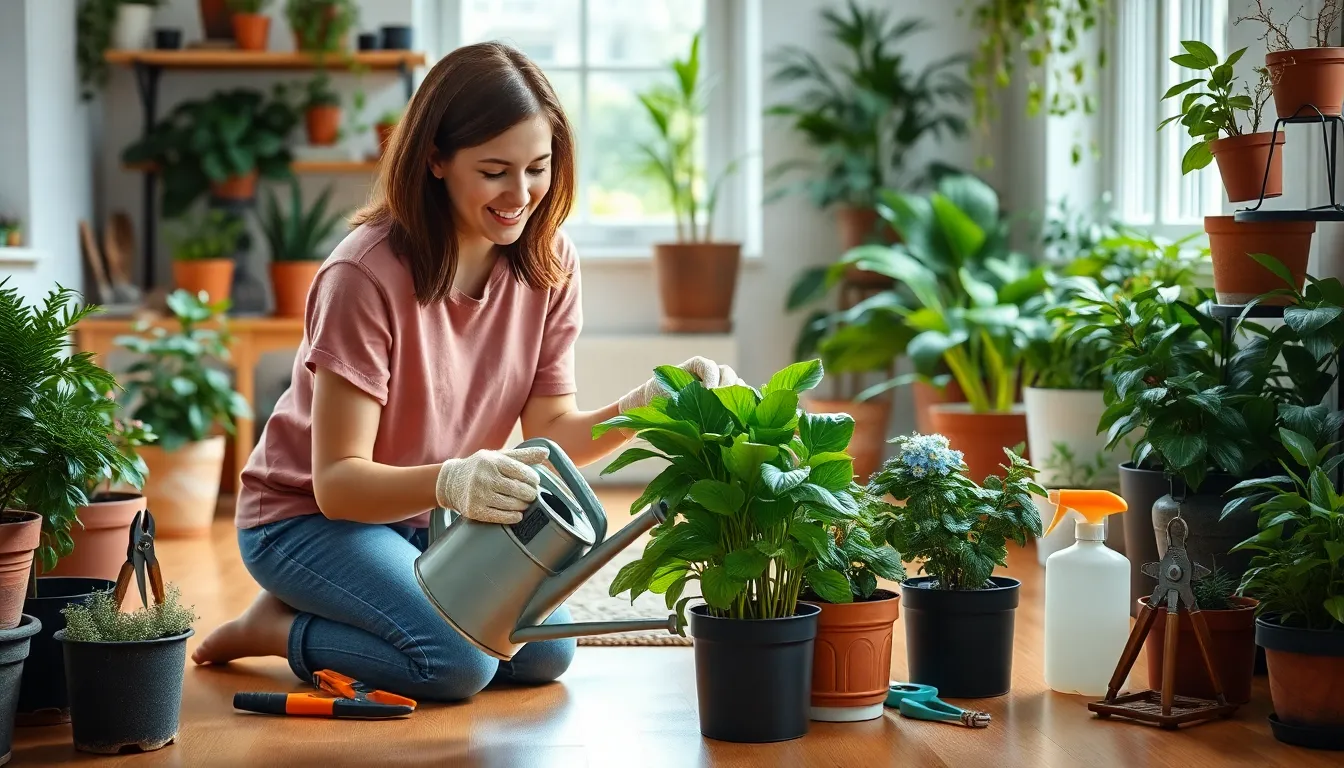
Essential tools streamline the process of indoor gardening while enhancing the experience. Investing in the right equipment guarantees healthy plants and a successful garden.
Gardening Supplies
Gardening supplies encompass various items essential for plant growth. Pots come in multiple sizes and materials, providing options for different types of plants. Soil is crucial, with potting mix and organic soil varieties enhancing growing conditions. Fertilizers, whether granular or liquid, supply necessary nutrients, promoting vigorous plant growth. Labels help identify plants, especially useful in mixed arrangements. Watering cans with spouts ensure even watering, preventing over-saturation and fostering plant health. Lastly, trays catch excess water, keeping indoor spaces tidy and dry.
Plant Care Tools
Plant care tools aid in maintaining healthy indoor plants. Pruning shears allow for precise trimming, encouraging healthier growth patterns. Soil moisture meters assess moisture levels, informing when to water plants. Hand trowels facilitate easy soil cultivation and potting. Spray bottles provide a method for misting plants, boosting humidity and promoting leaf health. Garden gloves protect hands while planting and caring for delicate foliage. Finally, grow lights support plants with optimal light exposure, particularly in low-light environments, ensuring they thrive indoors.
Choosing The Right Plants
Selecting suitable plants sets the foundation for a thriving indoor garden. Various plants cater to different skill levels and lighting conditions.
Best Plants For Beginners
Beginner-friendly plants include pothos, snake plants, and spider plants. Pothos thrives in various environments and requires minimal care, making it ideal for novices. Snake plants tolerate neglect and low light, adding architectural flair to any space. Spider plants produce offshoots, known as “pups,” which can be propagated easily. These options not only survive under less-than-ideal conditions but also help improve indoor air quality, providing a rewarding experience for budding gardeners.
Low-Light Plants
Low-light plants excel in dimly lit spaces, bringing greenery to shaded areas of the home. ZZ plants and peace lilies thrive with little sunlight. ZZ plants adapt well to neglect, while peace lilies flourish with regular watering, showcasing elegant white blooms. Cast iron plants also tolerate low light, making them perfect for beginners seeking resilient options. Incorporating these plants enhances any indoor environment, creating a calming atmosphere without requiring significant light exposure.
Indoor Gardening Techniques
Indoor gardening techniques offer innovative ways to cultivate plants effectively within homes. Two popular methods include hydroponics and vertical gardening, both suitable for various indoor settings.
Hydroponics
Hydroponics allows plants to grow without soil, utilizing a nutrient-rich water solution instead. This technique promotes faster growth since plants receive nutrients directly through their roots. Various systems, such as nutrient film technique or deep water culture, provide flexibility for different spaces. Enthusiasts may find smaller setups ideal for countertops or larger systems perfect for dedicated rooms. Hydroponic gardens can support lettuce, herbs, and even fruits, making it a versatile choice for indoor gardeners.
Vertical Gardening
Vertical gardening maximizes limited space by utilizing vertical structures to grow plants. Wall-mounted planters, trellises, or shelving systems create an attractive display while saving floor space. Many indoor gardeners opt for herbs, small vegetables, and flowering plants in such arrangements. This technique enhances decor and promotes better air circulation between plants. Vertical gardens also harness sunlight more efficiently, benefiting light-loving varieties. Perfect for smaller apartments, vertical gardening transforms bare walls into lush green spaces.
Common Challenges In Indoor Gardening
Indoor gardening presents unique challenges that can affect plant health and overall success. Understanding these obstacles helps cultivate a thriving indoor ecosystem.
Pests And Diseases
In indoor gardens, pests and diseases pose significant threats to plants. Common pests like aphids, spider mites, and mealybugs can infest plants, leading to damage and reduced growth. Preventative measures include regularly inspecting plants and using insecticidal soap when infestations occur. Diseases such as root rot and powdery mildew can arise from overwatering or high humidity. Ensuring proper ventilation and observing watering frequencies minimizes these risks. Treating infected plants promptly with organic fungicides helps control disease spread. Awareness of these common issues equips indoor gardeners to maintain healthy plants.
Environmental Factors
Environmental factors greatly influence indoor gardening success. Light conditions directly affect plant growth; insufficient light may stunt development while excessive light can cause burns. Adjusting plant placement according to their light preferences ensures optimal growth. Temperature regulation also plays a crucial role; most indoor plants thrive between 65°F and 75°F. Sudden temperature fluctuations can stress plants, so maintaining a stable environment is essential. Additionally, humidity levels affect indoor gardens; many plants prefer humidity around 40-60%. Using humidifiers or pebble trays can help create a favorable atmosphere for plant vitality. Managing these environmental factors contributes to robust indoor gardening outcomes.
Indoor gardening offers a unique opportunity to enhance living spaces while promoting well-being. By embracing this rewarding hobby, individuals can enjoy a healthier environment and a more serene atmosphere. The variety of plants available means there’s something for everyone, regardless of experience or space constraints.
With the right tools and knowledge, anyone can overcome challenges and create a flourishing indoor garden. This pursuit not only beautifies homes but also contributes positively to mental and physical health. As more people discover the joys of indoor gardening, it’s clear that nurturing plants indoors is a fulfilling journey worth embarking on.