
House plants have a magical way of transforming any space into a vibrant oasis. But let’s face it—navigating the jungle of leaves and stems can feel like a game of botanical hide-and-seek. Whether it’s the spiky cactus that looks like it’s plotting world domination or the innocent-looking pothos that’s secretly a plant ninja, knowing your greens is essential for keeping them alive and thriving.
Identifying house plants isn’t just for the green-thumbed elite; it’s for everyone who wants to avoid the awkward moment of mistaking a peace lily for a rubber plant. With a little knowledge, anyone can become a plant whisperer, impressing friends and family with their newfound skills. So grab your magnifying glass, put on your detective hat, and get ready to unravel the leafy mysteries that await in your home.
Understanding House Plants
Identifying house plants plays a crucial role in their care and maintenance. Knowledge about plant species contributes to their health and longevity.
Importance of Identifying House Plants
Recognizing plant types allows for tailored care routines. Being aware of specific requirements helps in avoiding common mistakes. Identifying pests or diseases becomes easier with understanding plant characteristics. Knowing the light and water needs of each species ensures optimum growth. Confidently distinguishing between similar-looking plants simplifies care and enhances gardening enjoyment.
Benefits of House Plants in Your Home
House plants offer numerous advantages for indoor environments. They improve air quality by filtering toxins and releasing oxygen. A variety of species can also boost mood and reduce stress levels. Adding greenery enhances aesthetics, turning any space into a vibrant oasis. Additionally, studies link house plants to increased productivity and creativity. Overall, embracing house plants contributes positively to one’s well-being and living space.
Common Types of House Plants
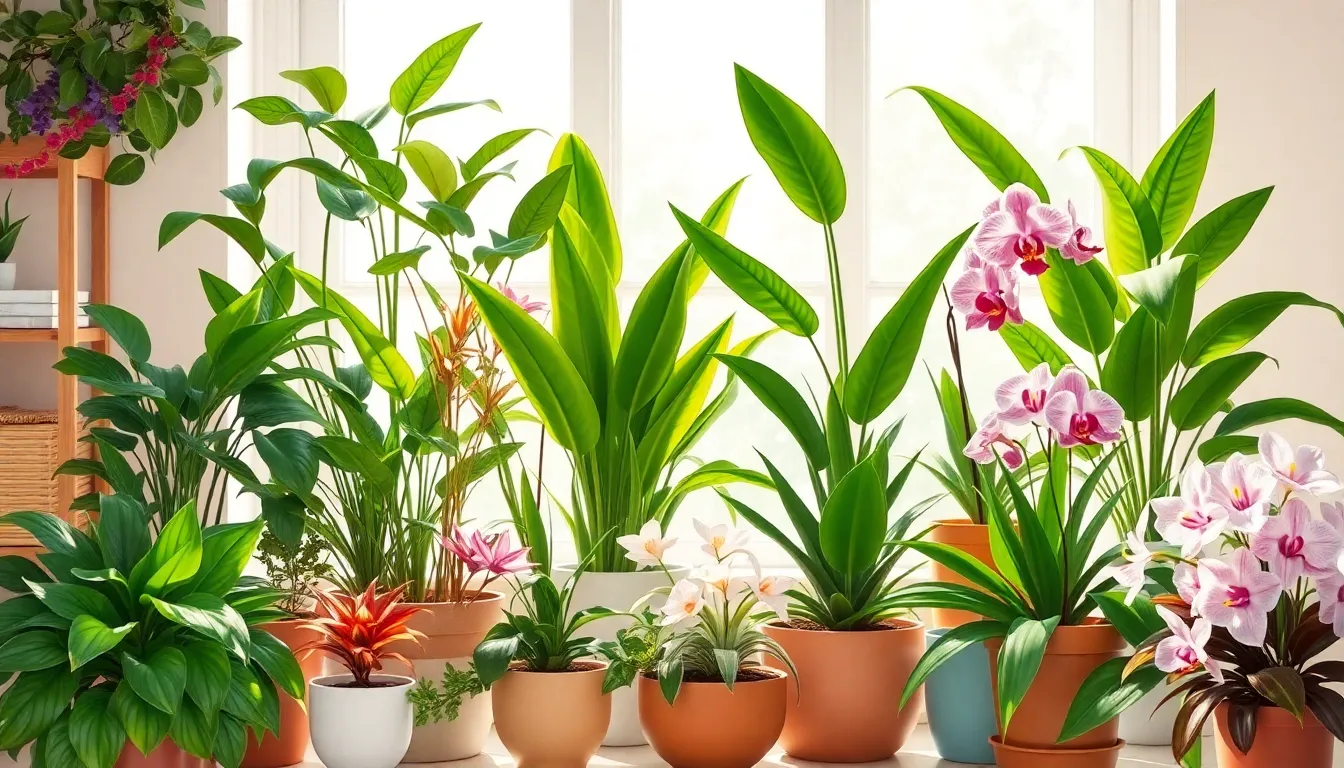
House plants can significantly enhance living spaces by providing beauty and improving air quality. Knowing the various types of house plants contributes to effective care and maintenance.
Foliage Plants
Foliage plants are popular due to their lush green leaves. They thrive in a variety of indoor conditions and are low-maintenance. Some common examples include pothos, snake plant, and spider plant. Pothos tolerates low light and irregular watering, making it a great choice for beginners. Snake plant, known for its striking upright leaves, can survive in drought-like conditions. Spider plants, with their arching leaves, are excellent purifiers that remove indoor pollutants. Identifying foliage plants allows for tailored care, ensuring they remain healthy.
Flowering Plants
Flowering plants add vibrant colors and seasonal beauty to indoor spaces. They require a bit more attention than foliage plants but reward owners with beautiful blooms. Popular varieties include peace lily, African violet, and orchid. Peace lilies offer elegant white flowers and thrive in shade, perfect for dimly lit areas. African violets bloom multiple times a year, requiring moderate light and humidity. Orchids, with their exotic appeal, thrive on specific watering and light conditions. Recognizing flowering plants ensures proper care and encourages blooming, enhancing the aesthetic of any room.
Tips for Identifying House Plants
Identifying house plants involves careful observation and attention to detail. This section presents key features to consider for accurate identification.
Observing Leaf Shape and Size
Leaf shape and size serve as essential identifiers for house plants. Broad leaves often indicate moisture retention, found in plants like the pothos and snake plant. Long, slender leaves can suggest different care needs, typical of plants such as the spider plant. Round leaves often signify plants that thrive in bright environments, including the jade plant. Leaf texture also varies; smooth leaves may belong to tropical species, while rougher surfaces might indicate succulents. Examining these characteristics helps reveal plant types and their specific care requirements.
Noting Flower Characteristics
Flower characteristics play a significant role in plant identification. Color, shape, and size of blooms provide distinct clues. For instance, the peace lily features elegant white flowers, while the African violet exhibits vibrant purple petals. Specific flower shapes can indicate a particular species, such as the unique form of orchid blooms. Additionally, flowering patterns may reflect seasonal growth, with some plants blooming in spring and others throughout the year. By noting these features, identification becomes clearer, leading to better care practices and showcasing their beauty.
Resources for House Plant Identification
Resources make identifying house plants easier and more accurate. Utilizing technology and online tools enhances the plant identification experience.
Plant Identification Apps
Several plant identification apps streamline the process of recognizing house plants. Users can simply snap a photo of a plant, and the app generates potential matches based on visual data. Applications like PlantSnap and PictureThis offer extensive databases, covering thousands of species. These platforms also provide care tips and growth needs, which can greatly assist in proper plant maintenance. Regular updates ensure access to new information, making them invaluable for both novice and experienced plant enthusiasts.
Online Plant Databases
Numerous online plant databases serve as excellent references for house plant identification. Websites such as the Missouri Botanical Garden and USDA Plant Database offer comprehensive information on plant species. Detailed descriptions, images, and growth requirements are available, aiding users in distinguishing between similar species. Many of these databases include search functions that allow filtering based on characteristics like leaf shape or flower color. Accessing this wealth of information supports informed care decisions, enhancing overall plant health and longevity.
Identifying house plants is a rewarding journey that enhances both plant care and personal enjoyment. By honing observation skills and utilizing available resources, anyone can become adept at recognizing various species. This knowledge not only fosters healthier plants but also elevates the overall atmosphere of living spaces.
As individuals embrace their plant detective skills, they’ll discover the joys of nurturing their green companions. With the right understanding, house plants can thrive, offering aesthetic beauty and numerous health benefits. The world of house plants is vast and inviting, waiting for everyone to explore and appreciate its wonders.