
In an era where indoor gardening is on the rise, grow lights have become essential tools for plant enthusiasts. These innovative lights mimic natural sunlight, providing the perfect spectrum for photosynthesis. Whether you’re nurturing seedlings or maintaining a thriving indoor garden, the right grow light can make all the difference.
Understanding the various types of grow lights available can empower gardeners to make informed choices. From LED to fluorescent options, each type offers unique benefits tailored to different plants and growing environments. As more people turn to indoor gardening, mastering the use of grow lights can transform a simple hobby into a flourishing passion.
What Are Grow Lights?
Grow lights are artificial light sources designed to support plant growth by supplying the light spectrum needed for photosynthesis. These lights simulate natural sunlight, promoting healthy plant development in indoor gardening settings. Grow lights cater to various plant types and growth stages, ensuring plants receive adequate light regardless of their environment.
Different types of grow lights include:
- LED Grow Lights
- Energy-efficient and long-lasting
- Offer a customizable light spectrum
- Generate less heat, reducing the risk of plant damage
- Fluorescent Grow Lights
- Cost-effective and widely available
- Best for starting seedlings and growing leafy greens
- Emits a lower intensity light suitable for short-term use
- High-Intensity Discharge (HID) Grow Lights
- Powerful light source producing high lumen output
- Suitable for larger growing areas and flowering plants
- Requires additional cooling due to higher heat output
- Incandescent Grow Lights
- Less common for plant growth
- Provides minimal light spectrum for photosynthesis
- Generates significant heat, which can harm plants
Understanding the features and applications of each type of grow light aids in selecting the appropriate source for specific gardening needs. Properly choosing and using grow lights enhances the growth and yield of indoor plants, making it an essential aspect of indoor gardening success.
Types of Grow Lights
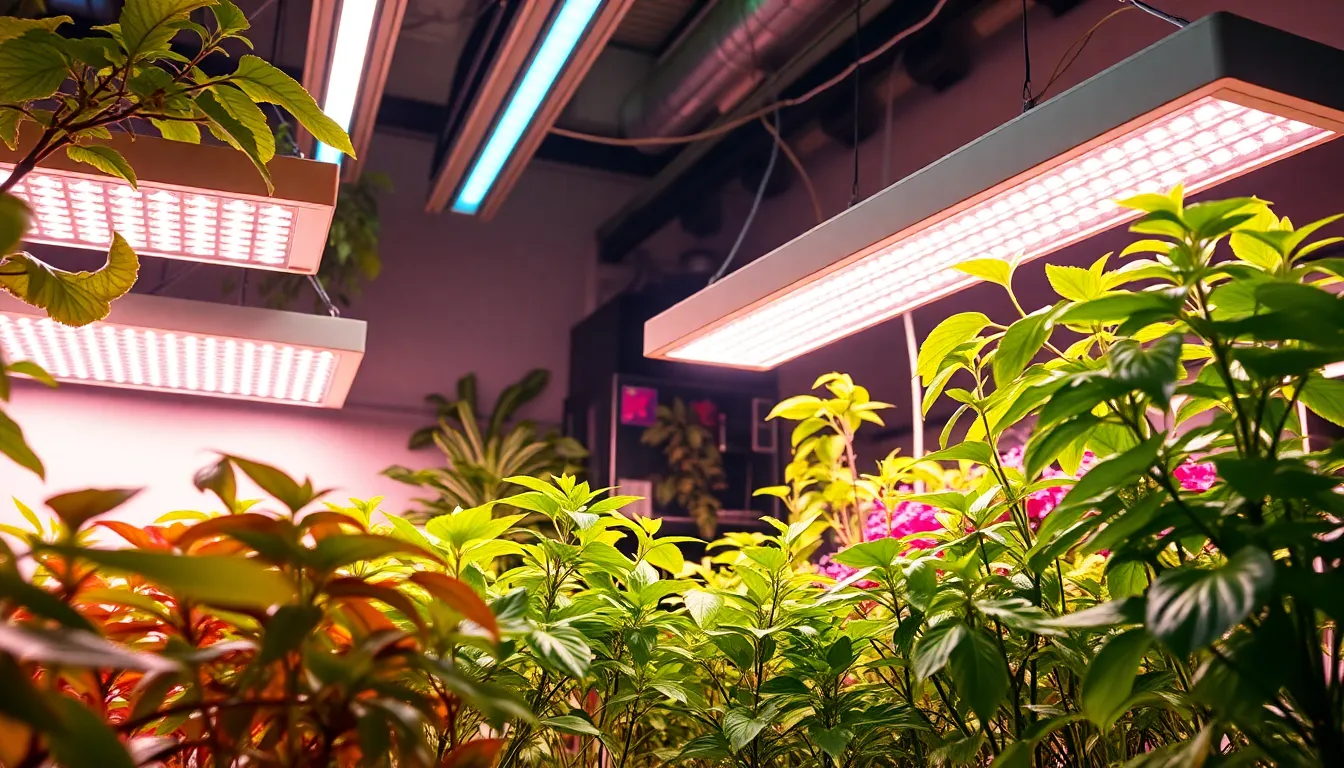
Different types of grow lights cater to various indoor gardening needs. Understanding these options helps in selecting the best light for specific plants and conditions.
LED Grow Lights
LED grow lights are energy-efficient and highly effective. They offer a customizable light spectrum suitable for all growth stages, from germination to flowering. LED lights produce less heat, reducing the risk of plant damage and decreasing energy costs. Many models allow adjustment of light intensity and spectrum, ensuring optimal growth conditions. With a lifespan of up to 50,000 hours, LED lights provide long-term value.
Fluorescent Grow Lights
Fluorescent grow lights are a cost-effective choice for starting seedlings and growing leafy greens. They generate little heat, allowing plants to be placed closer to the light source. T5 fluorescents are particularly popular for their brightness and energy efficiency. These lights are available in different spectrums, providing both blue light for vegetative growth and red light for flowering. Many growers prefer fluorescent lights for small spaces or as supplemental lighting.
High-Intensity Discharge (HID) Lights
HID lights produce powerful illumination, making them ideal for larger growing areas. They include both Metal Halide (MH) and High-Pressure Sodium (HPS) options. MH lights emit a balanced spectrum suitable for vegetative growth, while HPS lights excel during the flowering stage with their red-yellow spectrum. Despite their effectiveness, HID lights generate significant heat and require appropriate ventilation. Additionally, their shorter lifespan compared to LEDs poses a higher replacement cost over time.
Benefits of Using Grow Lights
Grow lights provide significant advantages for indoor gardening. They enhance conditions for plant growth, regardless of external environmental factors.
Year-Round Plant Growth
Year-round plant growth occurs due to the artificial light spectrum offered by grow lights. Plants receive necessary light regardless of seasonal changes. In winter, when natural sunlight decreases, grow lights maintain optimal growth conditions. With adjustable lighting schedules, gardeners can encourage specific growth cycles. For instance, seedlings thrive under extended light hours, while mature plants benefit from focused light during flowering. This consistency supports healthy development and allows for multiple harvests throughout the year.
Improved Crop Yield
Improved crop yield is a key benefit of using grow lights. Studies show that plants under proper lighting conditions grow faster and produce more. Grow lights enhance photosynthesis efficiency, leading to robust plant health. For example, indoor growers using LED lights report yields up to 20% higher than those relying solely on sunlight. Proper light spectrum targeting ensures that plants absorb the most beneficial wavelengths. Additionally, tailored lighting setups enable gardeners to create ideal conditions for specific plant varieties, maximizing output and quality.
How to Choose the Right Grow Light
Selecting the appropriate grow light is crucial for successful indoor gardening. Factors such as plant type and space requirements greatly influence the decision.
Consider Plant Type
Different plants require varying light spectrums and intensities.
- Seedlings thrive under fluorescent lights, as they provide adequate light without excessive heat.
- Leafy greens, like spinach and lettuce, benefit from a balanced spectrum provided by LED or T5 fluorescent lights.
- Flowering plants, such as tomatoes and peppers, respond well to HPS lights due to their emphasis on red and yellow wavelengths.
- Succulents and cacti prefer higher light intensities; therefore, strong LED or MH lights can stimulate their growth effectively.
Understanding the specific light requirements of each plant type enhances growth rates and overall health.
Assess Space Requirements
Available space dictates the type and intensity of grow light required.
- Small spaces benefit from compact LED lights; these provide high-intensity output without generating significant heat, allowing closer placement to plants.
- Medium to large growing areas require HID lights for powerful illumination, ensuring coverage of extensive spaces.
- Height considerations impact light choice; adjustable fixtures or mobile racks help maintain optimal light distance as plants grow taller.
Evaluating these space factors ensures plants receive adequate lighting for their specific environments, leading to healthier growth.
Grow lights are a game changer for indoor gardening enthusiasts. They provide the essential light spectrum that plants need to thrive regardless of external conditions. By understanding the different types of grow lights available gardeners can make informed choices tailored to their specific plants and growing environments.
The right grow light not only enhances plant growth but also boosts yields significantly. With options ranging from energy-efficient LEDs to powerful HID lights each type offers unique benefits that cater to various gardening needs. As indoor gardening continues to rise in popularity mastering the use of grow lights will undoubtedly lead to a more fruitful and satisfying gardening experience.