
Growing houseplants can be a rewarding experience, but the right soil makes all the difference. Choosing the best houseplant soil not only supports healthy growth but also ensures that plants thrive in their indoor environment. With a variety of options available, it’s essential to understand what each type offers and how it meets the unique needs of different plants.
From moisture retention to drainage capabilities, the right soil blend can enhance root development and overall plant health. Whether you’re nurturing a succulent or a tropical fern, knowing the best soil for your houseplants can transform your indoor garden into a lush oasis. Dive into the world of houseplant soil and discover the perfect mix for your green companions.
What Is Houseplant Soil?
Houseplant soil is a specially formulated medium designed to support the growth and health of indoor plants. It comprises a mix of organic and inorganic materials tailored to meet the unique needs of various plant species.
Components of Houseplant Soil
Houseplant soil typically contains:
- Peat Moss: Retains moisture while providing aeration.
- Perlite: Increases drainage and promotes root aeration.
- Vermiculite: Enhances moisture retention and nutrient availability.
- Compost: Supplies essential nutrients for healthy growth.
- Pumice: Improves aeration and drainage in heavy soils.
These components work together to create an ideal environment for roots, allowing them to absorb water and nutrients efficiently.
Importance of Quality Soil
Quality soil impacts plant growth significantly. Properly formulated houseplant soil promotes:
- Root Development: Healthy roots anchor plants and access vital resources.
- Moisture Management: Retains adequate moisture without over-saturation.
- Nutrient Availability: Supplies necessary minerals and supports plant functions.
Investing in quality houseplant soil translates to stronger, healthier plants and a more vibrant indoor garden.
Types of Houseplant Soil
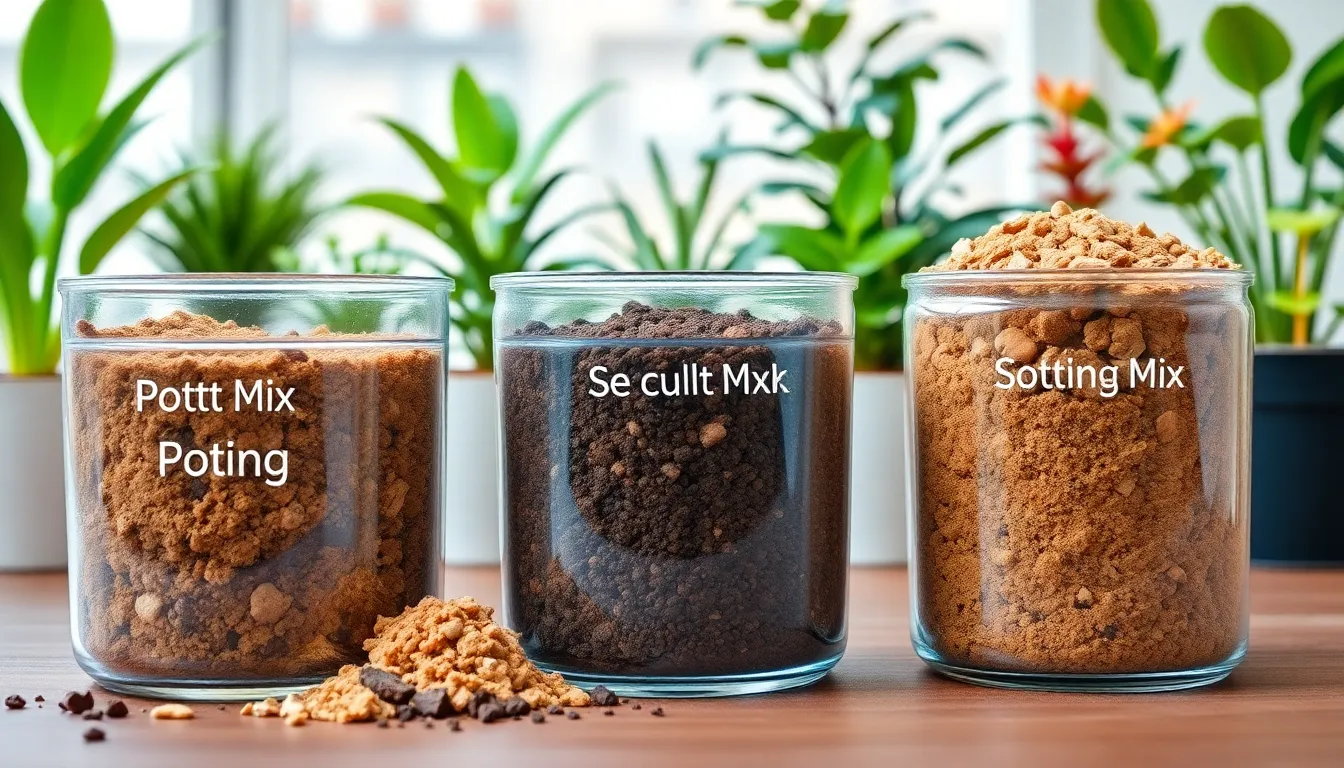
Choosing the right type of soil is essential for nurturing houseplants effectively. Various soil types cater to the specific needs of different plant species, enhancing growth and health.
Potting Mix
Potting mix serves as a primary soil option for most houseplants. It typically contains a blend of peat moss, perlite, and vermiculite, providing balanced moisture retention and drainage. Peat moss retains water, while perlite enhances aeration, ensuring roots access oxygen. This mix offers essential nutrients that promote healthy growth in a variety of indoor plants, making it a versatile choice for plant enthusiasts.
Cactus and Succulent Mix
Cactus and succulent mix features a special formulation designed for arid plant varieties. This mix usually contains coarse sand, perlite, and smaller amounts of organic material, facilitating excellent drainage. Such properties prevent root rot by allowing excess moisture to escape. Using this type of soil supports the unique needs of cacti and succulents, promoting vibrant growth and longevity, even under low humidity conditions.
Seed Starting Mix
Seed starting mix caters specifically to the needs of germinating seeds. Comprised mainly of fine-textured ingredients like peat moss and vermiculite, it offers a lightweight and sterile environment ideal for seedlings. This mix holds moisture without becoming waterlogged, minimizing the risk of damping-off disease. Utilizing seed starting mix enhances seedling development, encouraging strong roots and healthy growth upon their transition to larger containers or garden beds.
Criteria for the Best Houseplant Soil
Selecting the best houseplant soil involves evaluating several key criteria. Each factor contributes to a plant’s overall health and growth.
Drainage Properties
Drainage properties refer to a soil’s ability to allow excess water to escape while retaining adequate moisture. Good drainage prevents waterlogged roots, reducing the risk of root rot. A well-draining soil typically contains lightweight materials like perlite or coarse sand, which create air pockets. Moisture can be efficiently retained while ensuring that plant roots are not submerged in water. Ensuring a balance between water retention and drainage is crucial for various plant types.
Nutrient Retention
Nutrient retention highlights the soil’s capacity to hold essential nutrients vital for plant growth. Quality houseplant soil often includes organic matter, like compost, which enriches the soil with nutrients. This organic component helps retain moisture while slowly releasing nutrients, providing plants sustainable resources over time. An ideal soil blend maximizes nutrient availability, enabling plants to absorb necessary elements like nitrogen, phosphorus, and potassium efficiently.
pH Balance
pH balance is critical in determining nutrient availability to plants. Most houseplants thrive in slightly acidic to neutral soils, typically with a pH range of 6.0 to 7.0. Soil that is too acidic or alkaline can hinder a plant’s ability to absorb nutrients, leading to deficiencies. A balanced pH promotes healthy growth, while testing soil acidity can guide amendments, such as lime to raise pH or sulfur to lower it. Knowing the ideal pH for specific plants enhances their health and growth potential.
Recommendations for the Best Houseplant Soil
Selecting the right houseplant soil is essential for optimal growth. Here are recommendations based on brand comparisons and DIY soil mixes.
Brand Comparisons
| Brand | Composition | Best For |
|---|---|---|
| Miracle-Gro | Peat moss, perlite, compost | General houseplants |
| FoxFarm | peat, earthworm castings, bat guano | Nutrient-hungry plants |
| Espoma | organic ingredients, mycorrhizae | Organic gardeners |
| Black Gold | coconut coir, perlite, compost | Moisture retention |
| Dr. Earth | natural and organic materials | Herbs and vegetables |
Miracle-Gro offers moisture retention and nutrient availability, perfect for general houseplants. FoxFarm’s rich mix caters to nutrient-hungry plants. Espoma’s organic blend combines beneficial microbes for healthier growth. Black Gold excels in moisture retention with high-quality coir, while Dr. Earth is recommended for herb and vegetable enthusiasts due to its natural ingredients.
DIY Soil Mixes
Creating custom soil mixes offers flexibility to meet specific plant needs. Here are popular mixes:
- All-Purpose Mix: Combine 40% peat moss, 30% perlite, and 30% vermiculite for balanced moisture and drainage.
- Cactus and Succulent Mix: Blend 50% coarse sand, 30% perlite, and 20% potting soil for excellent drainage.
- Seed Starting Mix: Use 50% peat moss, 30% perlite, and 20% compost for a lightweight, nutrient-rich medium.
- Orchids Mix: Mix 50% bark, 30% perlite, and 20% coconut coir for appropriate aeration and drainage.
These DIY options ensure growers customize soil based on plant type, fostering healthier growth.
Choosing the right houseplant soil is essential for fostering vibrant indoor gardens. By understanding the specific needs of various plants and the properties of different soil types, gardeners can create an optimal environment for growth. Quality soil not only promotes healthy root development but also ensures effective moisture management and nutrient availability.
With the right mix, whether it’s a potting soil blend or a specialized mix for succulents, indoor plants can thrive. Investing time in selecting the best soil will lead to healthier, happier plants and a more beautiful home.