
A cluttered garage can quickly turn into a chaotic space, making it tough to find what you need when you need it. With the right garage storage solutions, anyone can transform this often-overlooked area into a functional and organized haven. From shelving units to wall-mounted racks, there are countless options available to maximize space and minimize mess.
Investing in smart storage not only enhances the garage’s functionality but also adds value to the home. Whether it’s seasonal decorations, tools, or sports equipment, effective storage solutions help keep everything in its place. Discovering the best strategies for garage organization can lead to a more efficient and enjoyable home environment.
Overview of Garage Storage Solutions
Garage storage solutions offer various methods to maximize space and organize items effectively. Popular options include:
- Shelving Units: Available in adjustable and fixed designs, shelving units provide vertical storage. They accommodate boxes, tools, and sports gear, enhancing accessibility while reducing floor clutter.
- Wall-Mounted Racks: These racks utilize unused wall space for storing bicycles, ladders, and gardening tools. They help keep items off the floor, simplifying cleaning and optimizing the garage layout.
- Cabinets: Garage cabinets come in various styles and materials. Lockable cabinets add security for hazardous materials, while open cabinets allow easy access to frequently used items.
- Overhead Storage: Overhead storage systems, such as ceiling racks, utilize high space to store seasonal items or less-used equipment. This option frees up valuable floor space for moving around.
- Hooks and Pegboards: Hooks and pegboards provide customizable wall storage for small tools, equipment, and accessories. They allow homeowners to create a tailored organization that promotes efficiency and visibility.
- Storage Bins and Containers: Clear storage bins enable easy identification of contents. Stackable containers maximize vertical storage and maintain organization for smaller items.
Choosing the right garage storage solution depends on available space, individual needs, and personal preferences. Implementing these solutions transforms a chaotic garage into a structured and efficient area, enhancing its functionality and aesthetic appeal.
Benefits of Effective Garage Storage
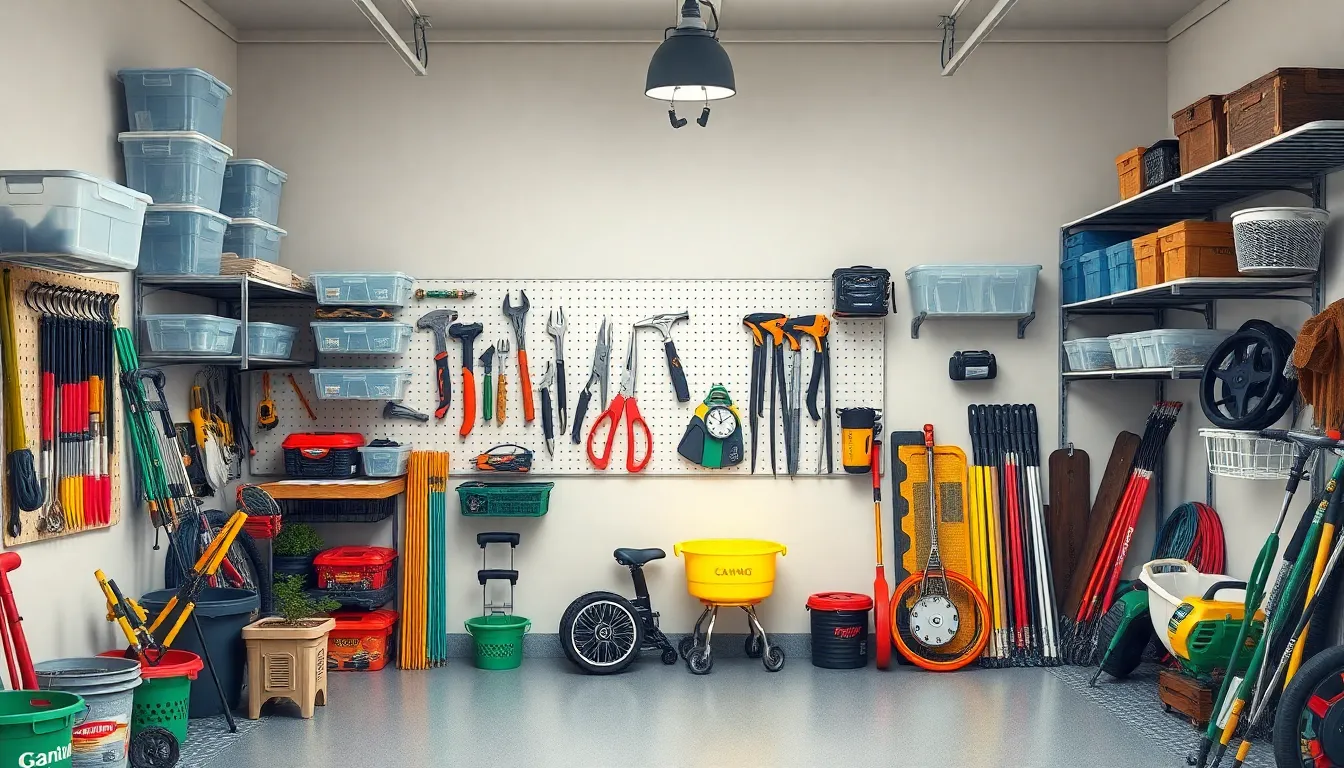
Effective garage storage significantly enhances functionality and improves overall organization. Implementing smart storage solutions allows homeowners to maximize available space while maintaining easy access to items.
Maximizing Space
Maximizing space in a garage is essential for creating an efficient environment. Utilizing vertical storage options, such as shelving units and wall-mounted racks, frees up floor space. Overhead storage systems allow for seasonal items, creating more room for frequently used tools and equipment. Customizable hooks and pegboards optimize wall areas by holding smaller items off surfaces, preventing clutter. Each of these solutions enhances the garage’s capacity, providing ample storage for diverse needs.
Enhancing Organization
Enhancing organization in the garage creates a systematic approach to storage. Clear storage bins allow for easy identification of contents, reducing time spent searching for items. Fixed and adjustable shelving units offer designated spaces for tools, gardening supplies, and sports equipment, making retrieval straightforward. Cabinets provide a secure and tidy way to store hazardous materials or valuables, contributing to a safer environment. By establishing a clear organizational structure, homeowners promote a more efficient and usable garage space.
Types of Garage Storage Solutions
Numerous garage storage solutions exist to fit varying needs and space availability. Effective organization can be achieved through the use of shelving units, cabinets, wall-mounted systems, and overhead storage options.
Shelving Units
Shelving units serve as essential tools for maximizing vertical space. Adjustable and fixed shelving designs accommodate various items, from boxes to tools. Often made from metal or wood, shelving units support heavy loads effectively. For example, heavy-duty shelves can hold over 300 pounds per shelf, providing efficient storage for bulk items like paint cans or gardening supplies. Homeowners can select from freestanding or wall-mounted options based on available space.
Cabinets and Lockers
Cabinets and lockers offer both security and organization. Lockable cabinets safeguard tools and hazardous materials, ensuring safety in family environments. Many cabinets come with adjustable shelves for customized storage that meets specific requirements. For instance, base cabinets often come equipped with a countertop, creating a workspace for projects. Models vary in size, from small cabinet units to larger lockers that accommodate bicycles and larger tools.
Wall-Mounted Systems
Wall-mounted systems include pegboards, hooks, and racks that utilize wall space efficiently. These systems keep tools and equipment accessible while preventing clutter. Pegboards allow users to customize their tool arrangement, accommodating different sizes and shapes. Wall-mounted racks specifically designed for bicycles and ladders further enhance organization. Homeowners benefit from easy visibility and quick access to frequently used items.
Overhead Storage
Overhead storage systems maximize ceiling space for seasonal or infrequently used items. These systems utilize sturdy racks or pulley systems to store bins or boxes out of the way. Durable materials often support significant weight, with many models holding up to 600 pounds. Overhead storage is ideal for holiday decorations, sporting equipment, and other seasonal items, keeping the garage floor clear and organized.
Tips for Choosing the Right Solution
Selecting the right garage storage solution requires careful consideration of personal needs and budget constraints. Evaluating specific requirements enhances the efficiency and satisfaction of the chosen storage options.
Assessing Your Needs
Evaluating available space determines the type of storage that fits. Measure garage dimensions to identify areas for shelving, cabinets, or overhead units. Identify items for storage, categorizing them as frequently used, seasonal, or rarely accessed. Prioritize accessibility for everyday items and consider functional elements such as weight capacity and ease of installation. Reviewing family needs ensures that the chosen solution accommodates all household members and their activities.
Budget Considerations
Establishing a budget sets boundaries for storage solutions. Compare costs of various options, including DIY projects and professional installations. Research affordable materials for shelving and bins that suit long-term use. Allocating a flexible budget permits adjustments based on evolving needs or unexpected expenses. Prioritizing cost-effective solutions, such as wall-mounted racks or clear bins, maximizes value and functionality while maintaining a structured garage environment.
Installation and Maintenance
Effective installation and regular maintenance of garage storage solutions enhance both functionality and longevity. Proper techniques ensure an organized space that meets needs and withstands wear over time.
DIY Installation Tips
- Read Instructions: Review manufacturer guidelines for installation before starting. Detailed instructions provide essential steps and necessary tools.
- Gather Tools: Assemble required tools such as drills, screwdrivers, levelers, and measuring tapes. Having the correct tools streamlines the installation process.
- Measure Space: Measure available space precisely to ensure proper fit for shelves, cabinets, or racks. Accurate measurements prevent unnecessary adjustments.
- Use Stud Finders: Locate wall studs for mounting heavy items. Anchoring storage solutions into studs secures them and supports weight efficiently.
- Level Shelves: Ensure shelves are level after installation. Level surfaces prevent items from sliding off and maintain organization.
- Test Load Capacity: Test load capacity after installation by placing items progressively. This helps confirm the solution’s durability before full use.
Maintenance Best Practices
- Regular Cleaning: Clean storage solutions periodically to remove dust and debris. Maintaining cleanliness prolongs life and retains a tidy appearance.
- Check Fasteners: Inspect bolts, screws, and brackets regularly for tightness. Loose fasteners can compromise safety and stability.
- Organize Contents: Keep items organized by usage frequency. Distributing weight evenly among shelves prevents tipping or sagging.
- Rotate Seasonal Items: Regularly rotate seasonal items in overhead storage. Doing so ensures accessibility and prevents overcrowding.
- Assess Structural Integrity: Examine shelves and racks for signs of wear or damage. Address issues promptly to maintain safety and functionality.
- Update Inventory: Review stored items annually. Discard or donate unused items to maximize space and keep the garage efficient.
Effective garage storage solutions can truly transform an often chaotic space into a well-organized haven. By utilizing vertical storage options and overhead systems, homeowners can maximize every inch of available space. Clear bins and designated shelving not only enhance accessibility but also promote safety and efficiency.
Investing in the right storage solutions tailored to individual needs and budget can lead to a more functional garage. Regular maintenance and smart organization practices ensure these solutions remain effective over time. With the right approach, a garage can become a valuable extension of the home that meets both practical and aesthetic needs.