
Bringing greenery indoors can transform any space into a vibrant sanctuary. Year-round houseplants not only enhance aesthetics but also improve air quality and boost mood. Whether it’s the lush foliage of a snake plant or the cheerful blooms of a peace lily, these plants offer a touch of nature that thrives regardless of the season.
Choosing the right houseplants can be a game-changer for both novice and seasoned plant lovers. With a variety of options that require minimal care, anyone can enjoy the benefits of indoor gardening. This guide will explore the best year-round houseplants that can elevate any home environment, making it easier than ever to cultivate a thriving indoor oasis.
Benefits of Year-Round Houseplants
Year-round houseplants provide numerous benefits that positively impact indoor environments. These plants enhance air quality, elevate aesthetics, and promote well-being.
Improved Air Quality
Improved air quality is one of the most significant benefits of houseplants. They absorb carbon dioxide and release oxygen, contributing to better indoor air. Plants such as peace lilies, snake plants, and spider plants effectively filter harmful pollutants. Studies from NASA indicate that certain plants can remove toxins like formaldehyde and benzene from the air. Incorporating these plants into living spaces creates a healthier atmosphere for occupants.
Enhanced Aesthetics
Enhanced aesthetics is another advantage of year-round houseplants. They add color, texture, and life to interior spaces. Potted plants can serve as focal points or complement existing decor. Varieties such as pothos and fiddle leaf figs provide striking visual appeal. Additionally, houseplants create a sense of tranquility and connection with nature, making indoor environments more inviting and relaxing.
Popular Year-Round Houseplants
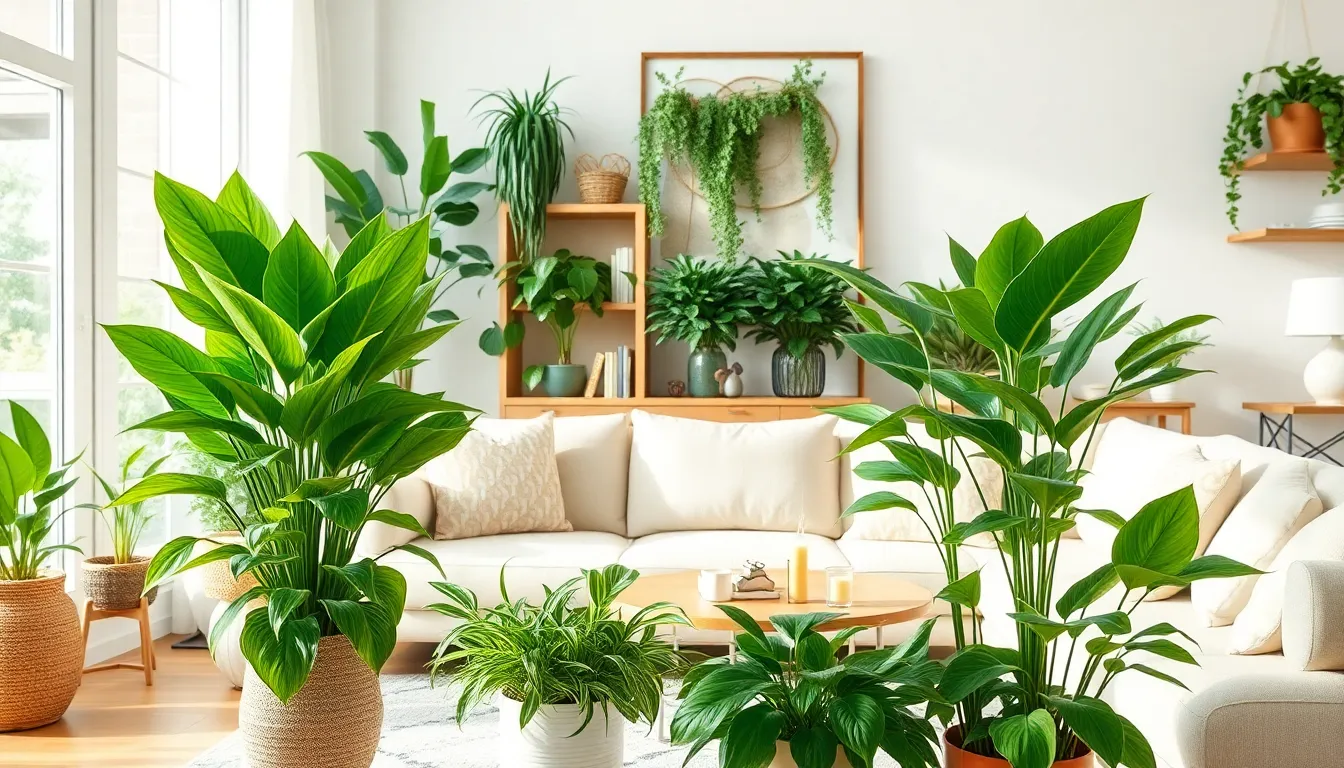
Many houseplants thrive year-round, providing beauty and benefits regardless of the season. This section explores both low-maintenance options and flowering varieties ideal for indoor environments.
Low-Maintenance Options
- Snake Plant: The snake plant tolerates low light and infrequent watering, making it suitable for beginners. It effectively filters indoor air pollutants, enhancing air quality.
- Pothos: Pothos grows well in various lighting conditions and requires minimal care. Its trailing vines add a touch of greenery to shelves and hanging planters.
- ZZ Plant: The ZZ plant thrives on neglect, requiring little water and light. Its waxy leaves provide a modern aesthetic while purifying the air.
- Spider Plant: Spider plants adapt easily to different environments and produce offshoots, making them an attractive choice. They absorb harmful toxins, contributing to a healthier living space.
- Peace Lily: Peace lilies prefer low light and moderate watering. Their elegant white flowers and air-purifying qualities make them popular in homes.
Flowering Varieties
- Christmas Cactus: The Christmas cactus blooms during the holiday season, with vibrant pink or red flowers. It requires bright, indirect light and moderate watering.
- African Violet: African violets produce colorful blooms throughout the year with proper care. They prefer bright, indirect light and consistent moisture for optimal growth.
- Orchid: Orchids come in various species, offering long-lasting flowers. They thrive in indirect light and require careful watering to prevent root rot.
- Geranium: Geraniums provide bright blooms any time of year with adequate sunlight. They thrive in well-drained soil and prefer to dry out between waterings.
- Bromeliad: Bromeliads bring unique shapes and colors indoors, producing striking flowers. They require bright, indirect light and occasional watering in their central cup.
Care Tips for Year-Round Houseplants
Caring for year-round houseplants requires attention to light and water needs. Understanding these factors ensures healthy and thriving plants.
Ideal Light Conditions
Proper light conditions are crucial for the health of indoor plants. Different plants require varying amounts of light:
- Low-light plants: Snake plants and pothos thrive in indirect light and can adapt to shaded areas.
- Bright, indirect light: Peace lilies and spider plants prefer locations near windows with filtered sunlight.
- Direct sunlight: Flowering varieties like geraniums and orchids benefit from bright, direct light for a few hours daily.
Adjust plant placement according to seasonal changes in natural light. Rotate plants every few weeks to promote even growth and prevent leaning towards light sources.
Watering Guidelines
Watering practices significantly affect plant health. Each plant has specific requirements for moisture:
- Low maintenance: Snake plants and ZZ plants tolerate dry soil and require less frequent watering, approximately every 2-3 weeks.
- Moderate watering: Peace lilies and spider plants thrive with regular moisture but avoid soggy soil; water once the top inch of soil dries out.
- High humidity: Flowering varieties like orchids often benefit from increased humidity levels, with watering needed once the potting medium feels dry.
Monitor moisture through techniques such as the finger test or using a moisture meter. Adjust the schedule based on environmental conditions and plant responses.
Common Challenges and Solutions
Maintaining healthy year-round houseplants presents various challenges. Addressing pest management and adapting to seasonal changes play crucial roles in successful indoor gardening.
Pest Management
Pests can harm houseplants, leading to damaged foliage and stunted growth. Common pests include aphids, spider mites, and mealybugs. To manage pests effectively, consider these solutions:
- Regular Inspection: Check plants weekly for signs of pest activity, such as discolored leaves or webbing.
- Natural Remedies: Use insecticidal soap or neem oil as environmentally friendly treatments to eliminate pests without harming the plants.
- Isolation: Separate infested plants from others to prevent pests from spreading.
- Cultural Practices: Maintain proper light, humidity, and watering practices to strengthen plants’ natural defenses against pests.
Dealing with Seasonal Changes
Seasonal changes can significantly affect indoor plants. Fluctuations in light, temperature, and humidity warrant specific strategies:
- Light Adjustments: Move plants closer to windows during shorter winter days for increased sunlight. Indoors, supplemental grow lights provide adequate illumination during darker months.
- Temperature Control: Keep plants away from drafts and heating vents, as extreme temperature fluctuations can stress them.
- Humidity Maintenance: Humidifiers or pebble trays filled with water enhance humidity levels, especially during dry winter months. Regular misting can also help maintain moisture around plants.
- Watering Adjustments: Reduce watering frequency during winter when plant growth slows. Check soil moisture levels before watering to avoid overwatering, which can lead to root rot.
Implementing these solutions helps gardeners maintain thriving year-round houseplants despite common challenges.
Year-round houseplants not only beautify indoor spaces but also contribute to a healthier living environment. By selecting the right plants and understanding their care requirements, anyone can enjoy the benefits of indoor gardening. The variety of options available ensures that both novice and experienced gardeners can find suitable plants that fit their lifestyle.
With proper attention to light, water, and seasonal changes, these plants can thrive and enhance the ambiance of any home. Embracing indoor gardening with year-round houseplants creates a vibrant atmosphere that fosters well-being and a deeper connection to nature.