
Succulents are the ultimate house guests—low-maintenance, charming, and they won’t eat your snacks. These delightful plants have taken the indoor gardening world by storm, and for good reason. With their quirky shapes and vibrant colors, they’re like the cool kids of the plant kingdom, effortlessly adding style to any space without demanding too much attention.
Overview of Common Succulent House Plants
Succulent house plants offer diverse options for indoor gardening enthusiasts. Echeveria stands out with its rosette shape and vibrant colors, making it a popular choice. Aloe vera, known for its healing properties, thrives with minimal care and infuses any space with greenery.
Haworthia features striking leaves and grows well in low light, making it suitable for various environments. Jade plants with thick stems and oval leaves symbolize good luck and prosperity, adding a symbolic touch to households. Sedum, a low-growing succulent, provides excellent ground cover and requires little water, making it a practical choice for those seeking ease of maintenance.
Agave, although known for its larger size, brings a dramatic flair to interiors. This hardy plant needs bright light and minimal water, showcasing a unique look in any setting. String of pearls, recognized for its trailing stems adorned with round leaves, offers a distinctive aesthetic that captivates observers.
Pachyphytum presents plump, soft leaves in various colors, creating an inviting atmosphere. It thrives in bright indirect light, requiring only occasional watering. Finally, the zebra plant, with its bold white stripes, stands out on any shelf or table.
Each succulent presents unique qualities, allowing for versatile arrangements and combinations. They’re perfect for individuals with busy lifestyles or limited gardening experience, providing a lively touch without extensive upkeep. Selecting the right succulent enhances the overall ambiance of the home, creating an inviting and stylish environment.
Popular Types of Succulent House Plants
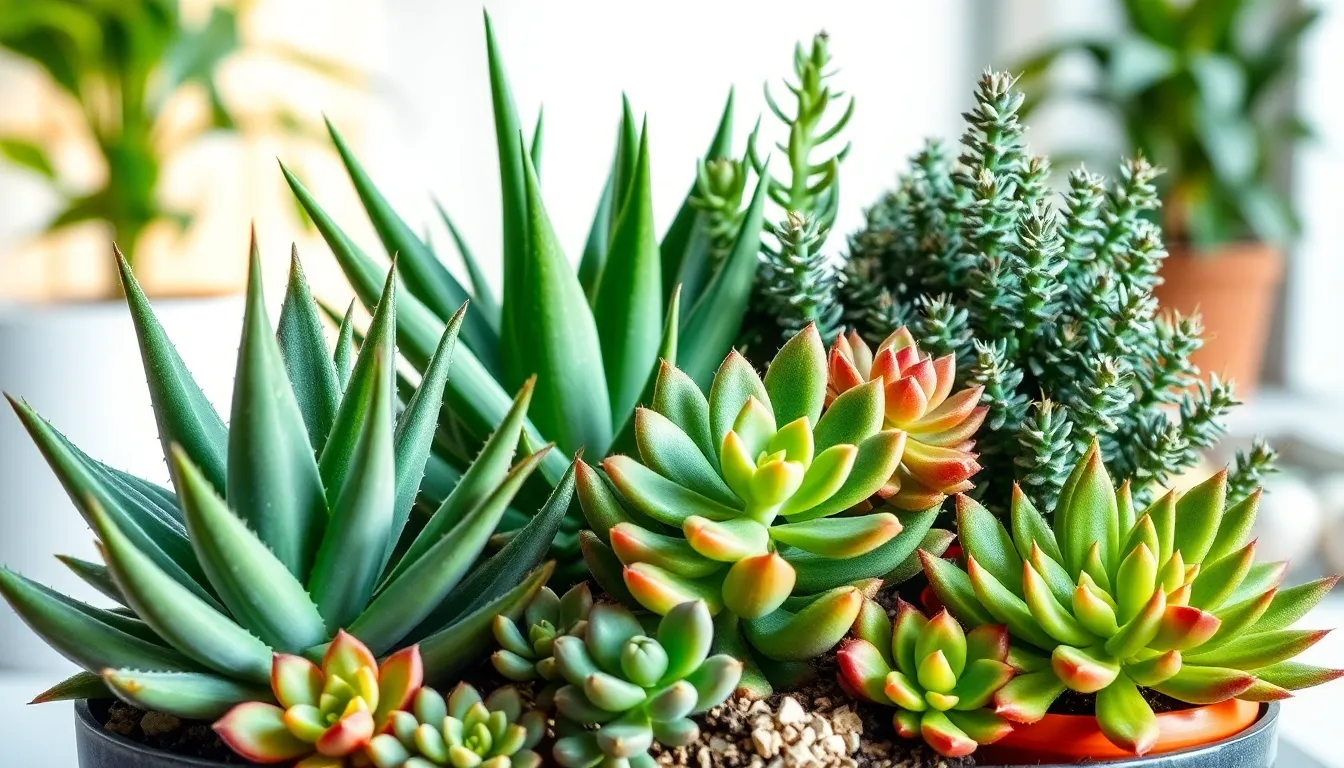
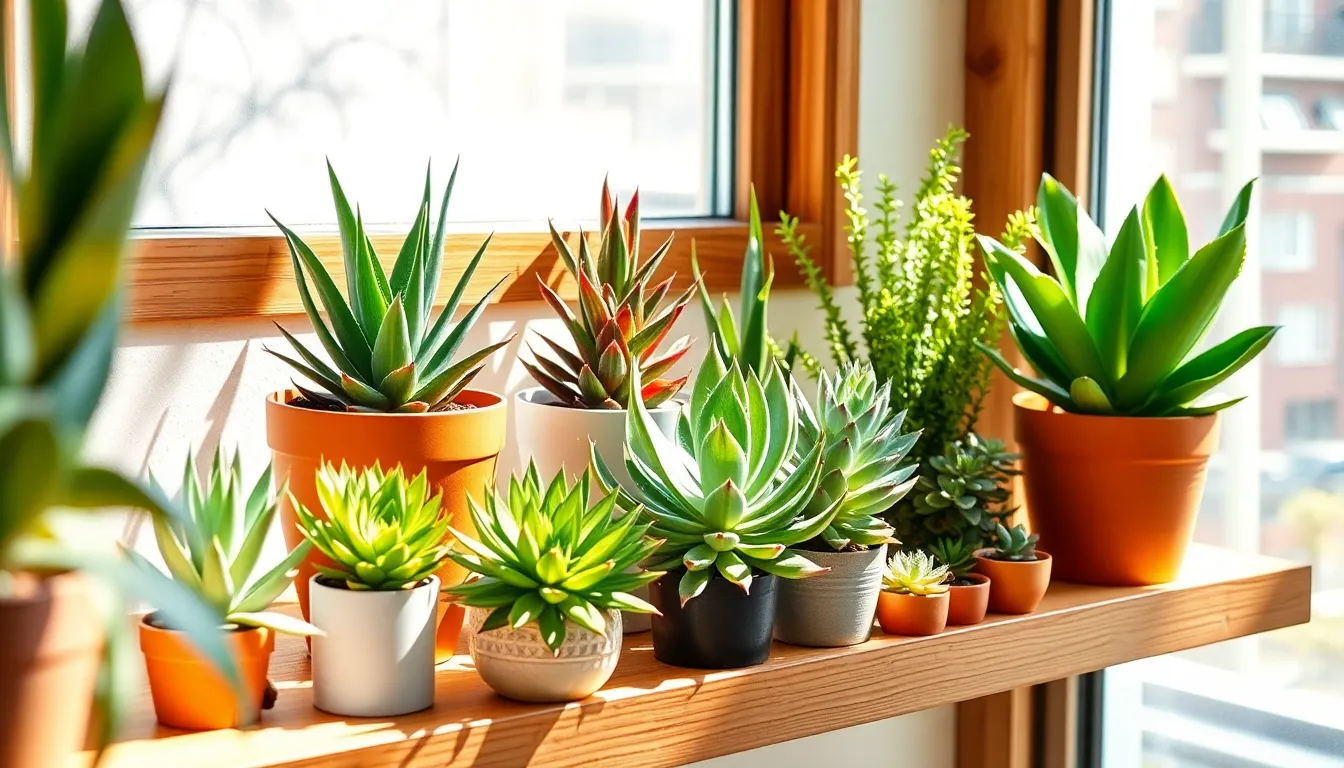
Succulents come in various types, each offering unique characteristics and benefits. Below are some popular types of succulent houseplants.
Aloe Vera
Aloe vera is well-known for its soothing gel, commonly used for skin healing. This succulent thrives in bright, indirect light and prefers well-draining soil. Growing Aloe vera can be straightforward, requiring minimal watering. The plant develops thick leaves that store moisture, making it drought-tolerant. Its air-purifying properties contribute to healthier indoor environments. Aloe vera’s versatility makes it an ideal choice for beginners and experienced plant enthusiasts alike.
Echeveria
Echeveria showcases stunning rosette shapes and vibrant colors that capture attention. These succulents thrive in bright light and prefer dry environments. Allowing the soil to dry out before watering promotes healthy growth. Echeveria varieties, such as Echeveria elegans, are notable for their unique foliage. They work well in various arrangements, complementing other plants beautifully. The aesthetic appeal of Echeveria adds an inviting touch to any indoor space.
Jade Plant
Jade plants symbolize good luck and prosperity, making them popular choices among plant lovers. This succulent features thick, oval-shaped leaves, resembling coins that represent wealth. Jade plants thrive in bright light, although they tolerate lower light conditions. Watering should be minimal, especially during the winter months when growth slows. Significant growth can occur over time, leading to elegant, bushy forms. Their longevity and resilience make jade plants favorites for indoor gardening.
Haworthia
Haworthia is appreciated for its compact size and distinctive textures. This succulent thrives in bright, indirect light and exhibits a variety of leaf patterns. Watering should be infrequent, as it retains moisture effectively. Haworthia varieties, such as Haworthia fasciata, display striking stripes and rosettes. These plants adapt well to small spaces, making them excellent for desks or shelves. Their unique appearance and low-care requirements ensure Haworthia remains a favorite among houseplant enthusiasts.
Benefits of Keeping Succulent House Plants
Keeping succulent house plants offers various advantages that enhance indoor living. These plants bring multiple benefits, contributing to a healthier and more inviting space.
Air Purification
Succulents play a significant role in improving indoor air quality. Various species, such as Aloe vera, remove harmful toxins from the air. Exposure to these plants helps create a cleaner environment, promoting better respiratory health. Additionally, the presence of succulents increases oxygen levels, which can elevate mood and productivity. Regularly incorporating succulents into indoor spaces can support overall well-being through enhanced air quality.
Low Maintenance
Low maintenance proves to be a key advantage of succulent house plants. Most varieties require minimal watering due to their water-storing capabilities. Succulents thrive in a range of light conditions, making them adaptable to different environments. For busy individuals, these plants offer an ideal gardening solution, eliminating the need for frequent care. Their resilience to neglect allows for a worry-free approach to indoor gardening, perfect for those new to plant care.
Aesthetic Appeal
Aesthetic appeal significantly contributes to the popularity of succulents. Unique shapes and vibrant colors add visual interest to any room. Various arrangements of succulents create stunning focal points in homes or offices. The versatility of these plants enables homeowners to mix and match species, resulting in personalized decor. With their ability to enhance interior design, succulents bring life and style to living spaces.
Care Tips for Succulent House Plants
Succulent house plants require specific care to thrive. These tips address the needs of popular varieties such as Aloe vera, Echeveria, and Jade plants.
Watering Requirements
Watering succulents involves a careful balance. These plants thrive with infrequent watering, typically every two to four weeks. Overwatering leads to root rot, so it’s crucial to allow the soil to dry completely between watering. Some specific varieties, like Echeveria, prefer dryer conditions. Observing the soil’s moisture level can help determine when to water. Signs of underwatering include shriveled leaves, while signs of overwatering might show as yellowing leaves. Adjusting watering schedules during winter months is also important for optimal health.
Light Conditions
Light affects the growth of succulent house plants significantly. Most prefer bright, indirect sunlight for several hours each day. For instance, Aloe vera thrives in well-lit environments but tolerates some shade. Conversely, Echeveria benefits from full sun to maintain its vibrant colors. Low-light conditions can stunt growth or lead to leggy plants reaching for light. Rotating pots every few weeks ensures even exposure to sunlight. Finding a suitable spot near a window or using grow lights can help these plants flourish.
Soil and Potting
Choosing the right soil for succulent house plants is essential for drainage. A well-draining potting mix, often labeled for cacti and succulents, contains sand, perlite, and peat. For optimal growth, use pots with drainage holes to prevent excess water from accumulating. Repotting every couple of years provides fresh nutrients and space for growth. Select a pot size that accommodates the plant without excess room, as too much space can retain moisture and lead to root issues. Checking the root system during repotting helps assess plant health.
Succulent houseplants offer a perfect blend of beauty and practicality. Their low-maintenance nature makes them ideal for anyone looking to enhance their living space without the burden of extensive care. With a variety of shapes and colors available, succulents can complement any decor style while providing health benefits like improved air quality.
These resilient plants thrive on neglect yet reward their caretakers with stunning displays. Whether it’s the calming presence of Aloe vera or the striking form of Echeveria, succulents bring life to indoor environments. By choosing the right varieties and following simple care tips, anyone can enjoy the charm and vibrancy that succulents add to their homes.