
In the world of processors, the battle between Intel’s Core Ultra 7 and the trusty i7 is heating up faster than a laptop on a Zoom call. Both chips promise impressive performance but cater to different needs. Whether you’re a gamer looking to crush your competition or a multitasker juggling spreadsheets, understanding the nuances of these processors can make all the difference.
Picture this: the Ultra 7 strutting in like a tech-savvy superhero, boasting advanced features and lightning-fast speeds. Meanwhile, the i7, a reliable workhorse, has been getting the job done for years. But which one deserves a spot in your rig? Buckle up as we dive into the specs, performance, and real-world applications of these two titans, helping you make an informed choice that’ll have your PC purring like a well-oiled machine.
Overview of Intel Core Ultra 7 and i7
Intel’s Core Ultra 7 processor represents the latest in high-performance technology, designed specifically for demanding applications. Enhanced architectural advancements provide impressive speed and efficiency, making this chip suitable for tasks like gaming and content creation. Users can expect superior multitasking capabilities from the Ultra 7 due to its increased core and thread counts.
On the other hand, the i7 remains a reliable option in Intel’s lineup. Known for its balanced performance, the i7 has gained user trust over the years. Familiar features, such as hyper-threading and turbo boost, enhance its capability for everyday tasks and more intensive applications alike.
Both processors cater to different segments of the market. The Core Ultra 7 targets enthusiasts needing cutting-edge performance. Gamers and professionals engaged in video editing or 3D rendering benefit significantly from its advanced specifications.
In contrast, the i7 is ideal for users who desire dependable performance without the need for the latest technology. It fits well for those completing standard tasks like browsing and document editing.
Performance metrics show tangible differences between the two processors. The Ultra 7 typically delivers higher frame rates in gaming scenarios, whereas the i7 maintains solid performance in typical productivity tasks.
Enhanced frequency ranges in the Ultra 7 contribute to its faster operation. For example, it may achieve clock speeds above 5.0 GHz under load conditions, compared to the i7’s max boosts in the 4.8 GHz range. Each processor possesses features tailored to user needs, showcasing Intel’s commitment to innovation.
Performance Comparison
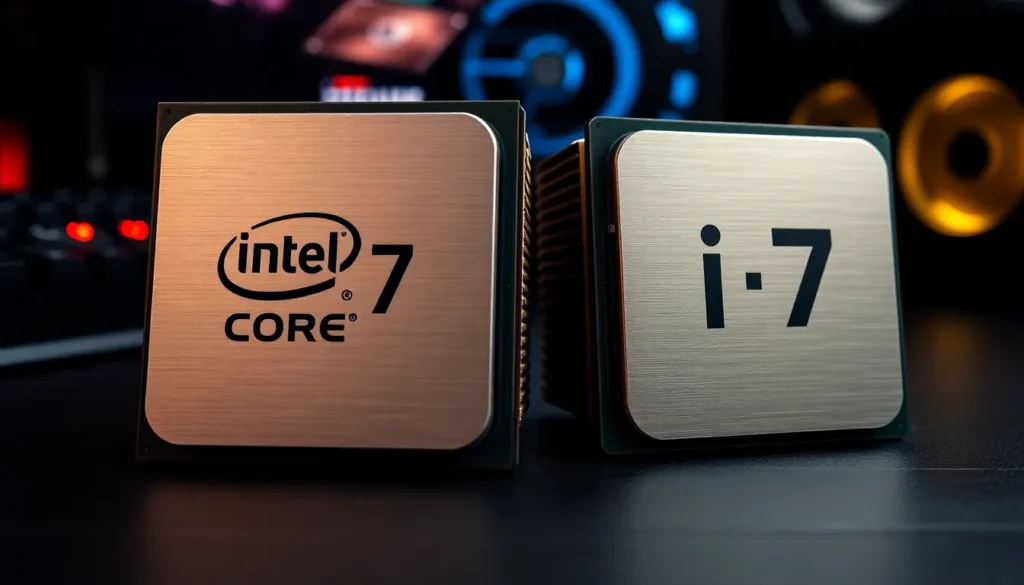
Intel’s Core Ultra 7 and i7 processors stand out in performance metrics, catering to distinct computing needs. Their capabilities can be measured through benchmark results and real-world applications.
Benchmark Results
Core Ultra 7 consistently scores higher in benchmark tests, outperforming the i7 in various scenarios. With clock speeds exceeding 5.0 GHz, it achieves impressive frame rates in gaming benchmarks. Typical results show Ultra 7 gamers enjoying smoother graphics and faster load times compared to i7 users, who experience maximum boosts around 4.8 GHz. Additionally, multicore performance for Ultra 7 reveals significant advantages due to increased core and thread counts, leading to better efficiency in demanding tasks.
Real-World Applications
In real-world applications, Core Ultra 7 excels in intensive tasks such as video editing and gaming. Users notice faster render times and enhanced multitasking capabilities, especially when running resource-heavy software. Meanwhile, the i7 remains an excellent choice for daily computing and gaming at moderate settings, balancing speed and efficiency effectively. Gamers leveraging i7 find it satisfying for most current titles, though high-end performance may be limited. Overall, Core Ultra 7 appeals to enthusiasts seeking the latest technology, while i7 serves users requiring dependable performance for everyday tasks.
Power Efficiency
Power efficiency serves as a crucial factor when comparing the Intel Core Ultra 7 and i7 processors. Each design emphasizes unique strengths that cater to different user preferences.
Thermal Management
Thermal management plays a vital role in maintaining optimal performance levels. Core Ultra 7 processors incorporate advanced cooling technologies that effectively dissipate heat, ensuring enhanced performance during intense tasks. The i7 series also features effective thermal solutions, designed to maintain stability under load. However, with a higher core count, the Ultra 7 often manages heat more efficiently, making it suitable for extended periods of heavy use.
Battery Life
Battery life significantly impacts overall user experience, especially for laptops. Ultra 7 processors, utilizing AI-enhanced efficiencies, optimize power consumption to extend battery life during various tasks. In contrast, i7 processors deliver solid battery performance, maintaining efficiency for everyday tasks. Users leveraging performance-centric applications may notice that Ultra 7 CPUs drain battery less frequently during demanding tasks, enhancing usability without requiring constant charging.
Features and Technologies
The comparison between Intel’s Core Ultra 7 and i7 illustrates some significant technological advancements in both processors. Each offers distinct features that appeal to specific user needs.
Integrated Graphics
Integrated graphics capabilities vary between the Ultra 7 and i7. Intel’s Core Ultra 7 features Intel Iris Xe graphics, providing enhanced performance for gaming and multimedia tasks. This integrated solution supports superior graphics processing with improved frame rates in modern titles. In contrast, the i7 includes Intel UHD Graphics, sufficient for basic gaming and everyday tasks. While both processors cater to users who prefer integrated solutions, the Ultra 7 shines in gaming performance and graphic-intensive applications.
AI Capabilities
AI capabilities mark a notable distinction between the two processors. The Core Ultra 7 integrates advanced AI technologies, streamlining performance through intelligent task management. This processor optimizes workload allocation, ensuring that demanding applications run seamlessly. By utilizing AI-enhanced efficiencies, users experience quicker processing times and smoother multitasking. On the other hand, the i7 lacks comparable AI integration, making it less adaptable for modern, AI-driven applications. Users prioritizing advanced AI features will find the Ultra 7 significantly more appealing for their computing needs.
Pricing and Value
The Core Ultra 7 commands a premium price, reflecting its advanced technology and performance capabilities. Typically, it falls within the range of $400 to $600, depending on specific configurations and availability. Enthusiasts appreciate this investment for the high-end features tailored to demanding tasks.
Comparatively, the i7 offers a more accessible pricing structure, generally ranging from $300 to $400. Many users find this price point appealing for balanced performance in everyday applications and moderate gaming.
Value perception heavily depends on user needs. For gamers and content creators, the Ultra 7’s superior multitasking capabilities justify the higher cost. Enhanced frame rates and faster render times can significantly improve workflow and gaming experiences.
In contrast, users prioritizing reliability and efficiency may lean toward the i7. Its solid performance for typical computing tasks allows many to maximize their investment, especially in applications that don’t require ultra-high performance.
Warranty and support considerations also influence value assessments. The Ultra 7 typically benefits from extended customer service policies reflecting its premium status. The i7, however, provides substantial support as well, reinforcing its reputation among users needing dependable performance.
Overall, assessing the pricing and value of the Ultra 7 versus the i7 entails understanding individual requirements. Those needing advanced features may justify the Ultra 7’s higher cost, while users focused on reliable performance can often find the i7 sufficient for their needs.
Choosing between the Intel Core Ultra 7 and i7 ultimately hinges on individual needs and performance expectations. The Ultra 7 stands out for those who demand cutting-edge technology and superior multitasking capabilities. Its advanced features and higher clock speeds make it ideal for gaming and content creation.
On the other hand the i7 remains a solid choice for users who prioritize reliability and balanced performance for everyday tasks. Its proven track record ensures dependable operation without the need for the latest advancements.
Both processors have their unique strengths making them suitable for different user profiles. Understanding these distinctions will help users make informed decisions tailored to their specific computing requirements.